About this hut
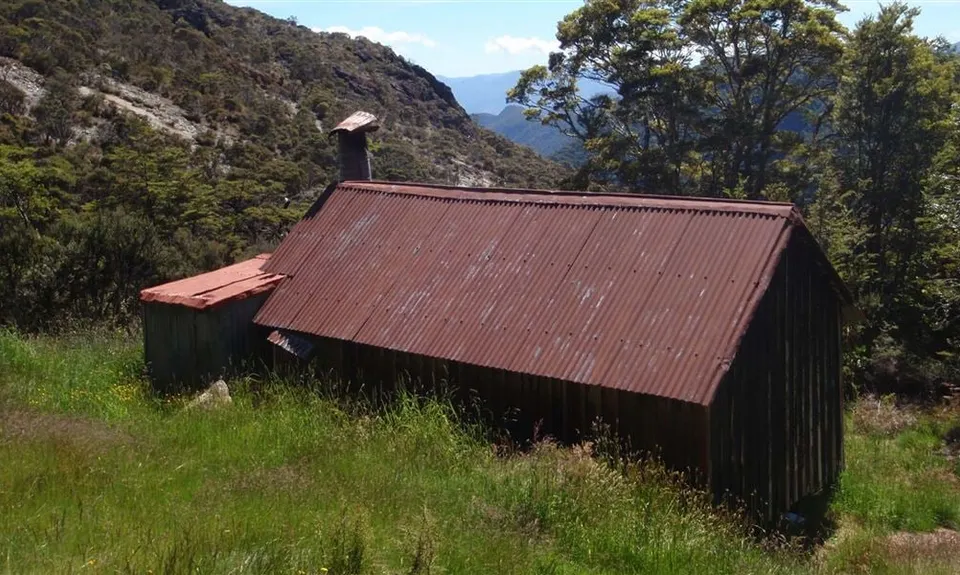
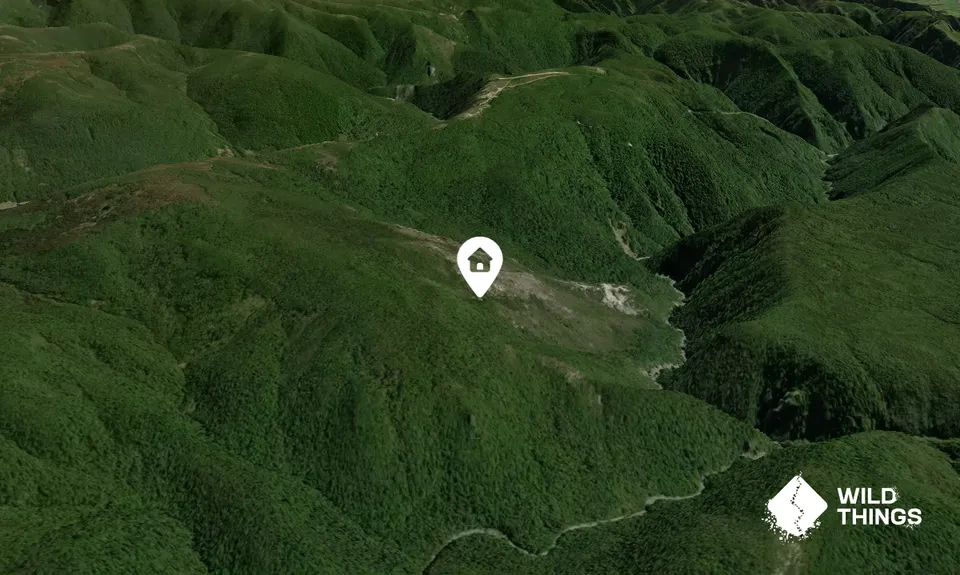
The cottage is set in a grassy bush clearing with views over the valley towards Takaka. Some of the plants and flowers Henry and Annie planted in their garden remain, including currants, gooseberries, hellebores and daffodils.
Bunks have been set up in the tiny bedroom and the hut is available as accommodation for trampers.
Asbestos safety
Asbestos Cottage has been decontaminated and areas of asbestos contamination around the hut have been remediated. Do not disturb the soil.
Heritage
Asbestos Cottage was built by prospectors looking for asbestos in the area. As well as being a relic of early interest in asbestos mining, Asbestos Hut is associated with Annie Fox and Henry Chaffey who lived in the hut for nearly 40 years.
From 1914 they lived in this isolated cottage. Escaping an abusive husband, Annie left her two teenage sons in Canterbury and fled with her lover Henry to the mountains of the Cobb Valley. The couple stayed as virtual recluses in the tiny hut for nearly 40 years.
The couple were largely self-sufficient; Henry would hunt deer and goat, and a well tended garden supplied various fruits and vegetables. The little money they needed was earned by taking rainfall readings for the Meteorological Service and Henry’s gold fossicking.
The cottage had a tidy homely interior with walls papered with pages from magazines and mining journals. The large smoky fireplace over which all cooking was done had given the walls and ceiling a brown patina. The floor was covered in deer skins and the few pieces of furniture had covers and white doyleys. Shelves around the walls and in the bedroom were laden with preserves, jams and pickles. From about 1936 a battery driven radio took pride of place in the living room.
Chaffey spent many years mining and trying to encourage commercial interest in the local asbestos deposits as well as searching for other minerals. Henry was in regular contact with the outside world through his mining ventures and trips out to Motueka and Takaka for supplies. Annie however remained a recluse leaving the hut only once for an urgent operation at Nelson Hospital. She always dressed in Edwardian-style clothing for visitors who were required to signal their approach with a loud “cooee!”
Almost 20 years after fleeing, Annie’s first husband died and she was finally free to wed. The couple were married at the cottage on 5 April 1932 by both Anglican and Presbyterian ministers. The ceremony was followed by a wedding feast of roast goat, potatoes and bread with toasts of whisky and water.
Henry died on the side of the track in August 1951 aged 83. He had been returning from a provisioning trip. Unable to stay at the cottage by herself, Annie was taken to live with relatives in Timaru. However, she found it difficult to adjust and took her own life on 14 July 1953.
Remedial work was completed by DOC in 1997. The hut will be maintained to protect its historic fabric and minimise deterioration. A conservation plan and specifications have been prepared to guide its management.
- Read more about on the Te Ara website.
- Listen to the historic tale of on The Radio NZ Spectrum programme.
Facilities
Heating, Mattresses, Toilets - non-flush, Water from tap - not treated, boil before use, Water supply