About this hut
Heritage
Caswell Sound Hut is associated with early scientific research into introduced animals in New Zealand.
The Caswell Sound Hut is the last physical remnant of the New Zealand-American Fiordland expedition of 1949. The large scientific expedition was set up to study the Fiordland wapiti herd.
The Caswell Sound Hut was built of surplus supplies at the conclusion of the expedition, with the intention that it would be used as a base by wapiti hunters. Wapiti hunting is a significant part of the history of the northern sounds of Fiordland.
New Zealand-American Fiordland Expedition of 1949
In 1947 the joint New Zealand and American expedition was initiated to investigate the state of the Fiordland wapiti herd and its habitat. A total of around 50 people were involved in the 1949 field work, including parties looking at botany, zoology, geology, forest survey, and photography.
Camps and shelters were established between Caswell and George Sounds. The major base camp was built in the Stillwater River Valley above Lake Marchant. The range and distribution of the wapiti were noted and it was recommended that the wapiti be managed as a wildlife resource, rather than be exterminated.
The Caswell Sound Hut was erected at the end of the expedition, partly using unused rimu and beech, but also using leftover materials from the expedition camps.
The New Zealand-American Fiordland Expedition was an exceptional co-operative scientific project for its time. This hut, the final physical remnant of the project is an important landmark in that aspect of New Zealand history.
A base for studying wapiti
18 wapiti had been released into Fiordland at the head of George Sound in 1905, with the intention to establish a population of game animals. Half were a gift from US president Theodore Roosevelt, the remainder were purchased by the New Zealand government. They were fully protected until 1923, and controlled shooting was allowed until 1934 when all protection was lifted.
The main focus of the expedition was to examine the state of the animals, their habitat, and the differences between American and Fiordland wapiti, which were cross breeding with red deer.
Hut description
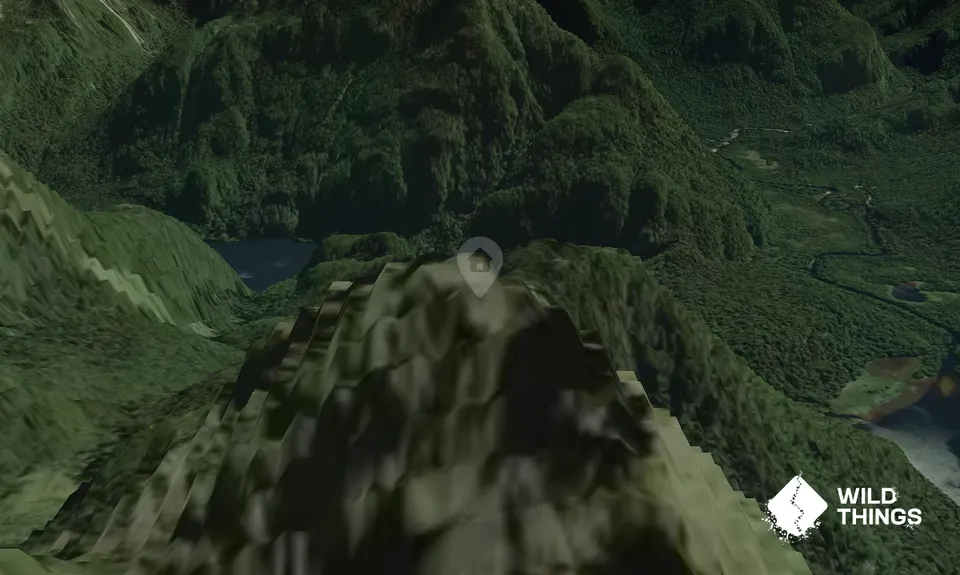
This hut is situated in a small clearing on the north side of the mouth of the Stillwater River, at the head of Caswell Sound (500 m from the Sound). It faces north-west and is sheltered from wind coming up the sound.
The hut is built of rimu framing covered with fine chicken wire mesh and heavy-duty melthoid. The cladding is standard corrugated iron. There was once furniture built of native timber and scraps of sawn timber. There is a large fireplace at one end of the hut, and a single wooden door in the front wall. Four pane windows are in place in both the end wall window overlooking the river and in the front wall.
Until the 1960s the hut was also used as an emergency supply depot for the amphibian planes used for scenic flights and sea rescues in the area. Emergency supplies kept at the hut could sustain stranded crew for several days in case of bad weather.
Many New Zealanders have had some experience with backcountry huts. This hut is the only remaining original example of a classic corrugated iron single roomed hut in Fiordland.
DOC's work
Over the years hunters have made minor modifications to the hut to keep it weatherproof and repaired. During the summer of 1993/94 DOC in partnership with the New Zealand Deerstalkers' Association undertook some maintenance work including replacing the floor and rotted out framing, and repairing the chimney. Recycled native beech was used.
Related links
- - Conservation blog 20 February 2012