About this hut
Heritage
Te Totatara Hut is a small, single storey timber building 4.2 m x 4.2 m in size, with one door, two windows and a fireplace. It has a low verandah on the eastern side and has a gabled pitched roof. The hut is primarily constructed from split totara slabs and framing members which are clearly visible on the interior. The roof and verandah are sheathed in corrugated iron, and the building in flat galvanised sheeting.
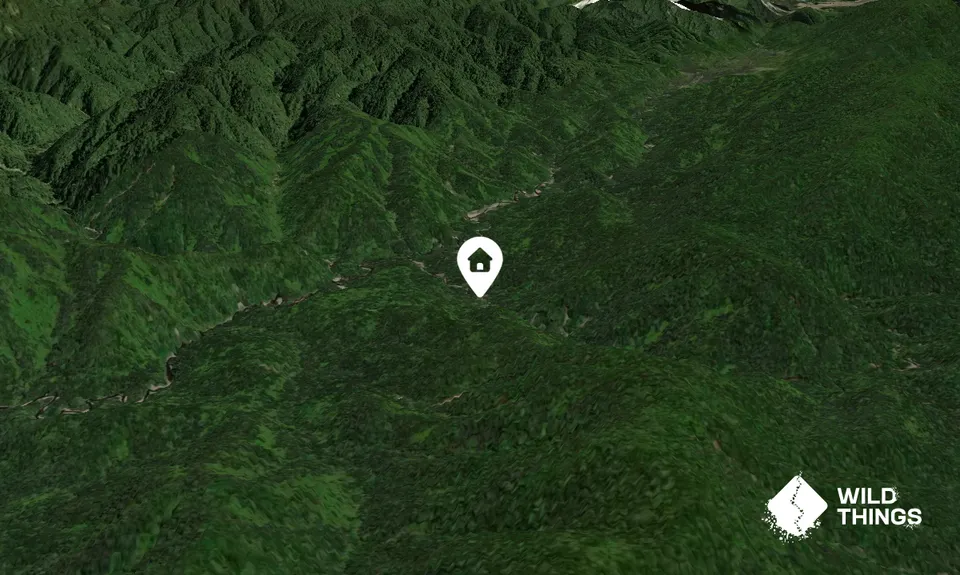
It is located in a small clearing, beside Parahaki Stream, in the south-west of Te Urewera and is managed by the DOC Aniwaniwa office.
History
The hut has its origins in efforts to control deer which were released into Te Urewera between 1898-1920 and protected until 1930. Tentative deer control was begun by the government in 1932 around Lake Waikaremoana. The Department of Internal Affairs (DIA) recommenced operations in 1938 with four men hunting in the Horomanga-Galatea area. World War II intervened, but after WWII the efforts to control wild animals intensified e.g. in 1955 ten hunters killed eight thousand deer.
The DIA base was at Ruatahuna but there was no accommodation where the work was taking place. It was decided to build four new huts and in 1952 a team of deer cullers led by Rex Forrester went into the bush to build them. No one in the team had built a hut before and only Rex Forrester had experience splitting and adzing timber. The first hut built was Te Totara. Materials for it were packed in by horse to the camp at the hut site. The timber used was taken from one felled rimu.
Fabric significance
The hut is an important example of very late, vernacular architecture - a style common in pioneering days that persisted in very remote areas and times of economic hardship and in this case during a period of shortage of building materials.
The felling of indigenous trees for building the huts in a national park protected for its environmental values was still an acceptable practice.
Huts of this construction are not rare but a collection of three such huts in a small area is probably unique. Rarity will be enhanced by the probable decline in the number of such places.
Historic significance
Te Totara Hut is the oldest surviving hut in Te Urewera. It commemorates the intensification of wild animal control when the damage caused by deer was acknowledged by government and the “golden age” of the New Zealand deer culler. It is also important as one of three surviving huts built at this time recalling the deer cullers’ landscape of the post-war period (1950s-60s).
Related links
- - Conservation blog 20 February 2012
Facilities
Heating, Mattresses, Toilets - non-flush, Water from tap - not treated, boil before use, Water supply
Fees and bookings
Fees
- Adult (18+ years): $15 per night
- Youth (5–17 years): $7.50 per night
- Child/Infant (0–4 years): free
Before you go, buy Hut Tickets for each night's stay. Put these in the honesty box at the hut. Or buy a Backcountry Hut Pass that gives unlimited use at most Standard and Serviced huts for a 12 month period.